Introduction
Ever wondered how products reach stores from factories? Or how businesses move goods across cities and countries? That’s where cargo comes in. The world of cargo shipping might seem straightforward – just moving stuff from point A to B, right? Well, there’s actually way more to it.
Different goods need different handling, packaging, and transportation methods. A smartphone shipment gets treated differently than a truckload of grain. Understanding these differences matters whether you’re running a business, managing logistics, or just curious about how global trade actually works. This guide breaks down everything about cargo – what it means, the various types floating around, and how cargo transportation companies handle each kind.
What is Cargo Anyway?
So what is cargo exactly? Simply put, cargo means goods or products being transported from one place to another. Could be anything – electronics, clothes, food, machinery, raw materials, you name it. The term covers all commercial goods moved by ships, planes, trucks, or trains.
Here’s something interesting: cargo differs from regular luggage or personal belongings. When goods move for business or trade purposes, that’s cargo. Your vacation suitcase? Not cargo. But those 500 laptops heading to retailers? Definitely cargo.
Cargo shipping involves the entire process – packaging goods properly, loading them onto vehicles, transporting them safely, and delivering them to the right destination. Businesses depend on cargo transportation companies to keep supply chains running smoothly. Without efficient cargo movement, stores would have empty shelves, and factories would halt production.
10 Common Types of Cargo
The cargo world categorizes goods based on their characteristics, handling needs, and transportation requirements. Let’s explore the main types of cargo you’ll encounter:
1. General Cargo
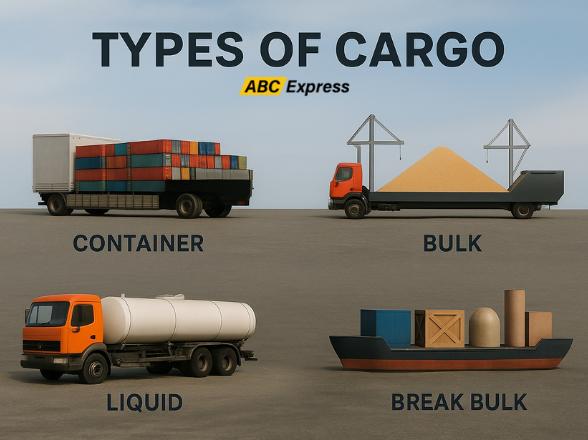
This includes everyday items that don’t need special handling. Packaged goods, boxes, crates – basically standard stuff. General cargo makes up a huge chunk of what cargo shipping services move daily. Easy to handle, doesn’t need temperature control or fancy equipment.
2. Bulk Cargo
Think loose materials loaded directly into transport vehicles without packaging. Grain, coal, sand, cement – materials that flow or get scooped. Bulk cargo gets categorized as either dry bulk (like wheat) or liquid bulk (like oil). These shipments usually move in massive quantities.
3. Containerized Cargo
This revolutionized cargo transportation. Goods packed into standard-sized metal containers that shift easily between ships, trucks, and trains. Those big rectangular boxes you see stacked on cargo ships? That’s containerized cargo. Makes loading and unloading way more efficient.
4. Refrigerated Cargo
Also called reefer cargo. Perishable items needing temperature control – frozen foods, fresh produce, medicines, and flowers. Cargo shipping services use specialized refrigerated containers or vehicles. Temperature monitoring happens throughout transit because even small fluctuations can spoil entire shipments.
5. Liquid Cargo
Liquids are transported in tankers or drums. Includes petroleum products, chemicals, edible oils, and beverages. Liquid cargo needs sealed containers that prevent leaks and spills. Some liquids are hazardous, requiring extra safety measures from cargo transportation companies.
6. Roll-on/Roll-off Cargo
Vehicles that drive on and off transport ships or carriers themselves. Cars, trucks, tractors, construction equipment. Called RoRo cargo. Super efficient for automobile shipments – just drive them onto the vessel instead of using cranes.
7. Hazardous Cargo
Dangerous goods requiring careful handling. Flammable materials, toxic chemicals, explosives, radioactive substances. Strict regulations govern hazardous cargo shipping. Specialized training and equipment are mandatory. Even small mistakes can have serious consequences.
8. Oversized Cargo
Items too big for standard containers. Industrial machinery, wind turbine blades, construction equipment, and large boats. Also called project cargo or heavy-lift cargo. Needs special permits, route planning, and handling equipment. Cargo shipping services charge premium rates because complexity increases.
9. Perishable Cargo
Time-sensitive goods that deteriorate quickly. Fresh fruits, vegetables, dairy, seafood, cut flowers. Speed matters enormously here. Cargo transportation companies prioritize quick transit and proper storage. Delays can mean total loss.
10. Break Bulk Cargo
Individual pieces are loaded separately rather than in containers. Steel beams, large pipes, machinery parts, timber. Common before containerization became standard. Still used for items that don’t fit containers or when destinations lack container-handling facilities.
Cargo by Different Transportation Modes
Different types of cargo travel through various transportation modes. Each method has strengths depending on what’s being moved.
Cargo by Air
Air cargo moves goods via airplanes – the fastest method available. Perfect for urgent shipments, high-value items, and perishable goods needing quick delivery. Electronics, pharmaceuticals, fresh flowers, and emergency supplies often fly. Cargo shipping services by air cost more but save time. Weight and size limitations apply since plane capacity is finite.
Cargo by Road
Trucks handle road cargo – most flexible transportation option. Door-to-door delivery, easy scheduling, works for short and medium distances. Almost every types of cargo travels by road at some point. Especially dominant for last-mile delivery within cities. Cargo shipping services Delhi relies heavily on road transport connecting businesses across the city and nearby regions.
Cargo by Water
Ships carry cargo across oceans and waterways – oldest and most economical method for long distances. Container ships, tankers, bulk carriers dominate international trade. Water transportation handles massive volumes that aircraft or trucks can’t manage. Takes longer but costs significantly less per ton. Most global cargo shipping happens by sea.
Cargo by Rail
Trains transport cargo over land routes – efficient for bulk goods and long domestic hauls. Coal, grain, automobiles, containers all move by rail. More fuel-efficient than trucks for heavy loads. Rail works great when origins and destinations have railway access. Many cargo transportation companies use rail for the main haul, trucks for final delivery.
Why Cargo Differentiation Matters?
Understanding different types of cargo isn’t just academic – it has real practical importance. Here’s why categorization matters:
Safety comes first. Hazardous cargo mixed with food items? Disaster waiting to happen. Proper classification ensures dangerous goods stay separated and handled correctly.
Cost efficiency improves. Different cargo needs different equipment and handling. Knowing what you’re shipping helps cargo transportation companies quote accurate prices and allocate appropriate resources.
Regulatory compliance stays intact. Various cargo types face different regulations. Perishables have health standards, hazardous materials have safety rules. Misclassification can result in fines or shipment rejections.
Damage prevention increases. Fragile items need cushioning, refrigerated goods need cooling, bulk materials need containment. Right classification ensures proper packaging and handling, reducing losses.
Planning gets easier. Cargo shipping services can schedule better when they know what’s coming. Refrigerated cargo might need specific time slots, oversized cargo requires route planning.
Factors to Consider When Transporting Your Cargo
Choosing the right cargo shipping approach involves weighing several important factors:
Nature of goods: What exactly are you shipping? Fragile electronics need different care than construction materials. Perishables demand speed and temperature control.
Distance and destination: Local delivery or international shipment? Nearby places work well with road transport. Overseas shipping needs air or sea cargo routes.
Budget constraints: Air cargo costs more but delivers faster. Sea cargo saves money but takes longer. Balance your budget against time requirements.
Time sensitivity: Urgent delivery or flexible timeline? This determines whether you need express cargo shipping services or can opt for economical options.
Volume and weight: Shipping one box versus a container load changes everything. Bulk quantities often qualify for better rates from cargo transportation companies.
Special requirements: Need temperature control? Tracking systems? Insurance coverage? Security measures? Factor these into your planning.
Regulatory requirements: Some cargo types need special permits, customs documentation, or safety certifications. Research requirements beforehand to avoid delays.
Why Choose ABC Express for Your Cargo Transportation?
When searching for reliable cargo transportation companies, ABC Express stands out for compelling reasons.
1. Years of Expertise in Cargo Handling
ABC Express brings years of experience handling all types of cargo. From small packages to oversized industrial equipment, the team knows exactly how to manage each shipment safely and efficiently. This expertise translates into fewer damages, faster delivery, and peace of mind.
2. Strong Presence Across Major Metro Cities
For businesses in the capital region, cargo shipping services Delhi provided by ABC Express are second to none. Extensive local knowledge, established networks, and strategic warehouse locations mean faster pickup and delivery across Delhi and surrounding areas.
3. Advanced Real-Time Tracking Technology
Technology integration sets ABC Express apart. Real-time tracking lets clients monitor shipments every step of the way. Automated updates, digital documentation, and transparent communication keep everyone informed.
4. Commitment to Safety and Security
Safety and security receive top priority. Proper handling procedures, trained personnel, secure facilities, and comprehensive insurance options protect valuable cargo throughout transit. Special handling protocols exist for hazardous and fragile items.
5. Transparent and Competitive Pricing
Competitive pricing without hidden charges makes budgeting straightforward. ABC Express provides detailed quotes upfront, explaining all costs clearly. Volume discounts and customized solutions help businesses optimize shipping expenses.
6. Reliable and Supportive Customer Service
Customer service that actually helps. Dedicated support teams answer questions promptly, resolve issues quickly, and provide guidance on documentation and regulations. Building long-term relationships matters more than one-time transactions.
7. Flexible Scheduling and Routing Options
Flexibility in scheduling and routing accommodates urgent shipments and changing business needs. Rush orders, specialized routes, after-hours pickup – ABC Express adapts to client requirements rather than forcing rigid solutions.
Wrapping Things Up
Understanding what cargo is and recognizing different types of cargo transforms how businesses approach shipping and logistics. Each cargo category – from general goods to hazardous materials, from bulk commodities to oversized equipment – demands specific knowledge and handling approaches.
Choosing appropriate transportation modes, whether air, road, water, or rail, depends on balancing speed, cost, and cargo characteristics. The right cargo shipping services make the difference between smooth operations and frustrating delays.
For businesses needing dependable cargo transportation companies, especially cargo shipping services in Delhi, ABC Express delivers comprehensive solutions backed by experience, technology, and genuine customer focus. Ready to simplify your cargo shipping challenges? Connect with ABC Express today!
Read more : Door to Door Delivery