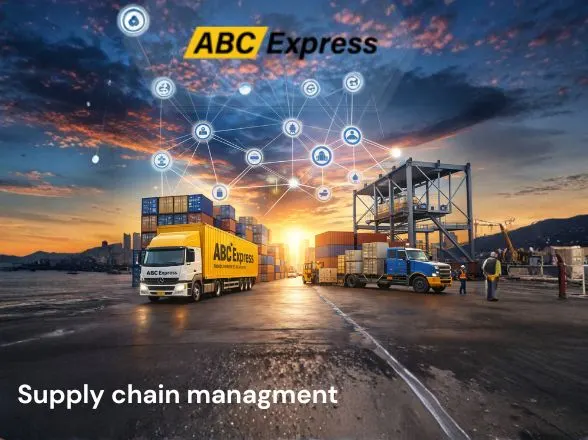
Your phone arrives three days after you ordered it online. The grocery store always has milk on the shelf. That shirt you wanted in medium blue shows up at your doorstep exactly when promised.
None of this happens by accident. Behind every product that arrives when you need it, there’s a supply chain working – and usually working hard.
Most people only notice supply chains when something breaks. Package arrives a week late. Store shelves sit empty. Product shows up damaged. But when supply chain management actually works, you don’t think about it at all. Things just show up.
For businesses shipping products across India – whether you’re a manufacturer, retailer, or e-commerce operation – understanding how supply chain management actually functions makes the difference between smooth operations and constant firefighting.
What Supply Chain Management Actually Means?
A supply chain is everyone involved in getting products from raw materials to customers. Suppliers providing components. Manufacturers assembling products. Warehouses storing inventory. Transport services moving goods. Retailers selling to end users.
Supply chain management is coordinating all these moving pieces so products flow efficiently from one stage to the next. Planning production volumes. Managing inventory levels. Arranging transportation.Tracking shipments. Making sure everything happens at the right time in the right quantities.
When supply chain management works well, products arrive when customers want them, inventory doesn’t pile up eating cash, and transportation costs stay reasonable. When it doesn’t work, you get stockouts losing sales, delays frustrating customers, and money wasted on rush shipments fixing problems.
The thing is, most supply chains involve dozens or hundreds of companies – suppliers, manufacturers, distributors,logistics providers, retailers – all needing to coordinate without anyone being fully in control. That coordination is what supply chain management does.
The 4 Core Elements of Supply Chain Management
Break down how supply chain management actually functions and you get four main elements. Each handles specific parts of the process, but they all connect.
Integration – Making Different Parts Talk to Each Other
Integration is about getting all the different pieces of your supply chain to communicate and coordinate. Your suppliers need to know what you’re planning to produce. Your warehouse needs to know what sales just promised customers. Your transport provider needs to know when shipments will be ready.
Without integration, everyone operates blind. Sales promises delivery dates without checking if inventory exists. Purchasing orders materials without knowing what production actually needs next month. Warehouses ship products that manufacturing should have held for a big order coming tomorrow.
This is where technology comes in – systems that let everyone see the same information. Your inventory levels update in real-time so sales knows what can actually be promised. Production schedules sync with purchasing so materials arrive when needed, not two weeks early or three days late.
The goal isn’t just sharing data. It’s different parts of the supply chain actually working together instead of doing their own thing and hoping it works out.
For companies using transport services across India, integration means your logistics partner knows shipment volumes ahead of time, can plan vehicle capacity properly, and isn’t getting surprised by rush orders that need same-day pickup.
Operations – The Actual Physical Work
Operations covers everything physical – manufacturing products, storing them in warehouses, picking and packing orders, preparing shipments.
On the manufacturing side, this means production planning, running assembly lines, quality control, managing factory output. On the warehousing side, it’s receiving goods, storing items efficiently, picking orders accurately, packing properly for shipment.
Efficient operations in supply chain management means doing this work without waste. Not wasting time on inefficient processes. Not wasting materials through poor quality control. Not wasting labor on redundant steps. Not wasting warehouse space through poor organization.
There’s a reason companies obsess over operations efficiency. A manufacturing line that produces 100 units per hour versus 95 units doesn’t sound like much. But over a year, that’s thousands of extra units from the same labor cost and factory space. Same with warehouses – better organization and picking processes mean handling more volume with the same team.
For businesses shipping products, operations also includes preparing shipments correctly. Right packaging so items don’t get damaged. Proper documentation so customs and transport services can process smoothly. Accurate labeling so deliveries reach the right place.
Purchasing – Getting Materials Without Getting Screwed
Purchasing manages supplier relationships and procurement. Finding reliable suppliers. Negotiating prices. Placing orders. Making sure materials arrive when production needs them.
Here’s the thing about purchasing – it’s not just about finding whoever’s cheapest. A supplier offering 10% lower prices doesn’t help if they deliver late and shut down your production line. Or if their quality is inconsistent and half the materials arrive defective.
Smart purchasing in supply chain management balances cost, quality, reliability, and lead times. Sometimes paying slightly more for a supplier who consistently delivers on time saves money compared to the cheapest option that causes production delays.
Purchasing also means managing risk. What happens if your main supplier has problems? Companies that source everything from one supplier face major issues when that supplier hits capacity constraints, quality problems, or financial troubles. Diversifying suppliers costs more in admin but protects your operations.
For Indian businesses dealing with global suppliers, purchasing involves managing imports, currency fluctuations, and longer lead times. For those sourcing domestically, it’s building relationships with local manufacturers and distributors.
Why Businesses Across India Choose ABC Express for Transportation Services
Distribution – Getting Finished Products to Customers
Distribution handles the final leg – moving completed products from your facility to customers or retail locations. This includes processing orders, allocating inventory, arranging shipping, and managing last-mile delivery.
Questions distribution answers: Which warehouse ships to which customers? How should deliveries be routed? What transport services work for different shipment types? How do returns get handled?
For e-commerce businesses, distribution means coordinating with logistics partners to get packages to customers quickly and intact. For B2B operations, it’s managing bulk shipments to retailers or distributors across different regions.
Distribution directly impacts customer satisfaction. Fast, reliable delivery creates repeat customers. Slow, unreliable delivery loses customers regardless of product quality.
The challenge in India is the last-mile piece. Getting a truck from Delhi to Mumbai is straightforward. Getting packages from a Mumbai distribution center to 500 different customer addresses across the city – with traffic, narrow lanes, addressing issues, and customers who aren’t home – that’s where distribution gets complicated and expensive.
This is where professional logistics networks matter. Companies like ABC Express that operate warehouses and transport services across multiple cities let businesses reach customers without building their own distribution infrastructure.
How These Four Elements Actually Connect?
Here’s what matters about supply chain management – these elements don’t work independently. They’re connected, and what happens in one affects all the others.
Integration feeds operations. When your systems show inventory running low, operations know to increase production or adjust warehouse picking to preserve stock for important orders.
Purchasing affects operations. If purchasing negotiates longer lead times to get better prices, operations need to adjust production schedules and maintain higher buffer stock to avoid running out.
Operations impacts distribution. Production running smoothly means distribution can promise faster delivery. Production facing delays means distribution needs to manage customer expectations and possibly use faster (more expensive) transport services to compensate.
Distribution influences purchasing. When distribution data shows which products customers actually want and where demand concentrates, purchasing can adjust material orders to match real demand instead of guesses.
This is why it’s called a supply “chain” – each link depends on others. One weak link weakens the whole chain. Strengthening one element while ignoring others doesn’t help much.
Companies with strong supply chain management treat these four elements as one coordinated system, not four separate departments doing their own thing and throwing problems over the wall to each other.
Why Logistics Matters So Much in Supply Chain Management?
Logistics is what physically moves everything. Raw materials from suppliers to manufacturers. Components between production stages. Finished goods from factories to warehouses to customers.
Without reliable logistics, the other elements of supply chain management fall apart. Perfect integration, efficient operations, smart purchasing – none of it matters if products sit in warehouses because transport isn’t available or arrive damaged because freight handling is rough.
This is where professional transport services become critical to supply chain management. Here’s what logistics actually does:
Physical Movement – Goods move by road, rail, air, or sea depending on speed needs, cost constraints, and distance. ABC Express operates transport services across India connecting manufacturers in one region with customers in another.
Warehousing – Inventory sits at strategic locations closer to customers. When orders come in, products ship from nearby distribution centers rather than distant factories. This cuts delivery time and enables businesses to promise faster delivery windows.
Inventory Tracking – Knowing what’s in each warehouse, what’s moving between locations, and what’s been delivered prevents “we think we have it” situations that create stockouts.
Last-Mile Delivery – Getting products from local hubs to actual customer addresses. Often the most expensive and complicated part of distribution, especially in Indian cities with traffic and addressing challenges.
Consolidation – Combining smaller shipments into full truckloads reduces per-unit transportation costs. ABC Express handles this for customers shipping regular volumes.
Reverse Logistics – Products flow backward too. Returns, warranty claims, damaged goods all need to move back through the supply chain.
For smaller businesses, partnering with established logistics providers means accessing transportation networks and warehousing that would cost too much to build independently. For larger companies, it means flexibility to scale capacity up and down seasonally without maintaining excess assets year-round.
Truck Load Planning in Logistics: Meaning, Process & Benefits
Technology’s Role in Modern Supply Chain Management
Technology changed supply chain management from administrative work to strategic advantage. Here’s how:
Real-time tracking shows exactly where products are. GPS on trucks. RFID tags on pallets. IoT sensors monitoring shipments. You know when deliveries will arrive, can reroute if delays happen, and give customers accurate windows instead of vague estimates.
AI analyzes historical data to forecast demand more accurately. This reduces stockouts (losing sales) and overstock (cash tied up in excess inventory).
Automated systems reorder inventory when levels hit predetermined points. Prevents human error and ensures consistent stock levels without someone manually checking and placing orders.
Route optimization software calculates efficient delivery routes considering traffic, delivery windows, vehicle capacity, and fuel costs. ABC Express uses this planning transport services across Indian routes.
Cloud platforms let everyone access the same information from anywhere. Your supplier in one state, your manufacturer in another, and your customer in a third all see the same order status.
Technology doesn’t replace the four elements of supply chain management – it makes them work better together. Integration becomes tighter. Operations become more efficient. Purchasing becomes more strategic. Distribution becomes faster and more reliable.
Interstate Transport Services in India: Connecting Businesses Across States
Conclusion
The elements of supply chain management – integration, operations, purchasing, and distribution – create the framework moving products from suppliers to customers. Each element handles critical functions, but the real value comes from how they connect and coordinate.
Understanding these key elements of supply chain management helps identify where problems actually occur. Is it poor integration leaving departments working with different data? Operations inefficiencies wasting resources? Purchasing decisions prioritizing cost over reliability? Distribution failures creating delivery problems?
Logistics and transport services sit at the center, physically moving products that supply chain management coordinates. Companies like ABC Express provide transportation infrastructure and expertise most businesses can’t economically build themselves.
Technology increasingly ties these elements together, creating visibility, enabling automation, and turning supply chain management from reactive firefighting into strategic advantage.
Whether you’re manufacturing products across India, managing retail inventory across locations, or running an e-commerce business – the principles stay consistent. Strong supply chain management coordinates integration, operations, purchasing, and distribution into one system that keeps products moving and customers satisfied.